
Why You Can’t Switch Off (Even When You Finally Sit Down)
It usually starts the moment you stop!
By the time I finally sit down in the evening, I’m done. Four children, a business to run, a house that never quite stays tidy for more than about five minutes… and all I really want at that point is to switch off. And yet, that’s usually the moment my mind decides to get busy.
I’ll sit down and suddenly I’m noticing everything. Things I haven’t done, things I probably should have done, things I need to remember for tomorrow. And sometimes it’s not even big things, it’s the random bits — washing still sitting there, shirts that haven’t been ironed, jobs that feel half-finished. Instead of relaxing, I’m mentally picking it all up again.
We’re not really designed for this pace of life!
One of the things I talk about quite a lot with clients is that we’re not really designed for the pace of life we’re living now. There’s always something coming in. Messages, emails, notifications, things to respond to, things to organise. Children are busy, we’re busy, there’s work, home, trying to keep everything running.
There’s very little space where nothing is happening, and even when there is, it doesn’t always feel like it. So when you finally stop, your body might sit down, but your mind doesn’t automatically follow.
Your brain is doing its job
What’s actually happening in those moments is that your brain is doing exactly what it’s meant to do. It’s scanning. Looking for anything that might need your attention, anything unfinished, anything uncertain, anything that could become a problem.
That’s your brain’s alarm system. We need it. It helps us function, stay organised, and keep things going. But it doesn’t always know when to stand down.
Why it gets louder when things get quieter
During the day, you’re distracted. Your attention is pulled in lots of different directions, so even if that alarm system is active in the background, you don’t notice it as much. But when you stop, when things go quiet, that’s when it becomes more obvious.
Your mind starts running through things — have you done that, what about tomorrow, don’t forget this — and suddenly it feels like you can’t switch off.
The pressure of “shoulds”
The tricky part is that these thoughts don’t feel random. They feel important. Like things you should be thinking about. And then all the “shoulds” start creeping in. I should have done more today. I should be more organised. I should have dealt with that already.
It becomes this constant pressure. There’s actually a term for this, sometimes jokingly called “musturbation”, where everything turns into a must or a should. And when your mind is full of those, it’s very hard to relax, because nothing ever quite feels finished.
Why thinking more doesn’t help
What most people do at this point is try to think their way out of it. Go over things, solve things, reassure themselves. But when your system is already switched on, thinking tends to follow that state.
So the more you think, the more your mind finds to think about. It becomes a bit of a loop.
What actually helps you switch off
What tends to work better is not starting with the thoughts at all, but starting with the body. Because if your system still feels slightly on alert, your mind will keep producing thoughts to match that.
When your body begins to settle, even a little, your mind naturally follows. Thoughts feel less urgent, less convincing, easier to step back from. You’re not forcing your mind to be quiet, you’re changing the state underneath it.
The permission we don’t often give ourselves
One of the things I often notice, both in myself and in my clients, is how difficult it can feel to just stop.
Even when we sit down, there’s often a sense that we should be doing something. Finishing something. Getting ahead on something.
And if we don’t, there can be a bit of guilt that creeps in.
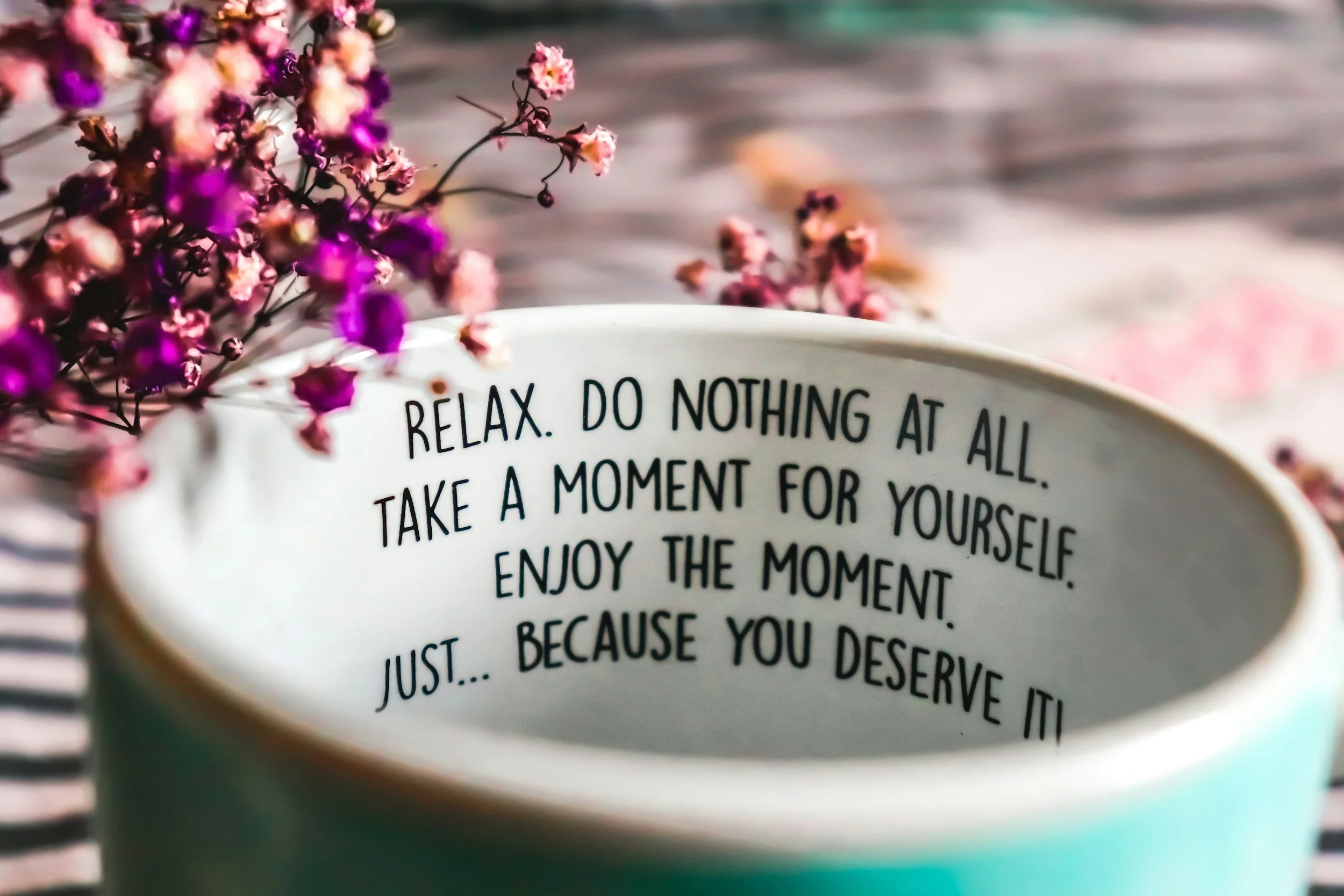
One of the suggestions I use in hypnosis, and one that really stayed with me personally, is very simple: do less… do nothing.
And what’s interesting is how powerful that feels, because it’s almost like being given permission.
Permission to stop.
Permission to pause.
Permission not to fix everything in that moment.
And when that permission is there, even briefly, something shifts. The pressure eases. The mind doesn’t need to keep pushing in the same way.
Learning to respond differently
This is also what I help people do in my work. Not to get rid of their thoughts, but to change how they respond to them. To notice when that alarm system has switched on, without immediately getting pulled into it.
So instead of reacting automatically, there’s a bit of space. And in that space, you can choose what to do next.
Sometimes that choice is simply… not now.
A place to start
If you’re anything like me, this is exactly the point in the day when you need something to help you switch off.
Because this is something I see so often, I’ve created a short guided hypnosis you can use when your mind won’t switch off. It’s about 10 minutes long and designed to help your body settle first, so your mind doesn’t feel like it’s running ahead of you.
It also gives you that sense of permission to stop — even for a few minutes.
You don’t need to do anything complicated. You can just sit or lie down, press play, and let your attention follow along.
👉 You can listen to it here: Switch Off Your Mind in 10 Minutes
Use it in the evening, before bed, or any time you notice your mind starting to take over.
Final thought
We do need anxiety. It’s our brain’s alarm system. It’s there to warn us that something might need our attention. But it’s not meant to be running constantly.
The shift is learning how to respond to that alarm, rather than letting it control you. Because when you can notice what your mind is doing and choose what to do next, that’s when things start to feel different.